Commercial kitchens operate as high-stress, high-volume environments where every second matters. Equipment failure here directly impacts daily service and long-term profitability. Wood and laminate surfaces might seem appealing initially. However, commercial operators consistently default to stainless steel for a reason. These intense culinary spaces quickly destroy porous or weak materials through relentless moisture, heavy impacts, and acidic food exposure. We need infrastructure built to survive these harsh daily realities. Moving beyond generic praise, we must objectively evaluate why these heavy-duty surfaces remain the gold standard. You will learn exactly how proper equipment choices ensure strict health code compliance. We will also explore how configurable prep stations drastically boost your daily workflow efficiency. Understanding the fundamental differences in metal grades and gauges guarantees you select the ideal prep station. This evaluation provides the necessary data for making smart, long-term equipment investments.
Key Takeaways
- Compliance First: Stainless steel’s non-porous nature is critical for meeting strict health codes and achieving NSF certification.
- Predictable ROI: Higher initial costs are offset by extreme durability, heat resistance, and a near-zero replacement rate when specified correctly.
- Workflow Optimization: Configurable options (undershelves, backsplashes, casters) adapt to specific "prep to plate" operational flows.
- Specification Matters: Success depends on selecting the right grade (304 vs. 430) and gauge (14G to 18G) for specific kitchen zones.
The Business Case: Long-Term Value and Durability
Commercial kitchens quickly destroy standard tables. Daily operations subject these surfaces to heavy physical impacts, constant moisture, and acidic food exposure. A standard prep shift involves pounding meat, vibrating machinery, and spilled tomato sauce. Lesser materials simply cannot withstand this continuous punishment without degrading. You must view your prep surfaces as critical operational infrastructure.
Superior Lifespan vs. Alternative Materials
You can easily compare the lifecycle of stainless steel against wood, laminate, or aluminum. Wood surfaces look beautiful but absorb moisture rapidly. They warp, splinter, and harbor deep-seated bacteria over time. Laminate tables rely on glued seams. These seams eventually peel and bubble when exposed to high heat or standing water. Aluminum offers a lightweight alternative but dents easily under basic pressure.
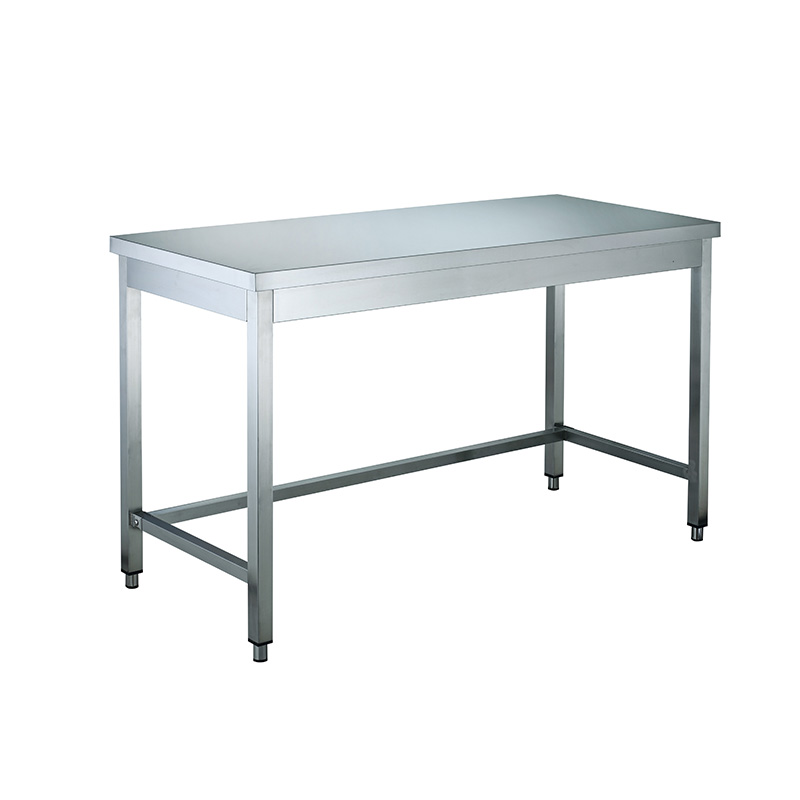
In contrast, Stainless Steel Worktables provide unmatched resistance to rust, corrosion, and physical warping. You can safely operate a heavy 50-quart commercial dough mixer on them. You can operate heavy meat slicers without fearing structural failure. The metal alloys handle the intense vibration and weight distribution perfectly. They do not bend, warp, or crack under these heavy daily loads.
| Material | Lifespan | Moisture Resistance | Impact Tolerance |
| Wood / Butcher Block | 2-4 Years | Low (Absorbs liquids) | Medium (Prone to gouging) |
| Laminate | 1-3 Years | Low (Peels at seams) | Low (Cracks easily) |
| Aluminum | 3-5 Years | High | Low (Dents easily) |
| Stainless Steel | 15+ Years | Excellent | High (Resists heavy impacts) |
Maintenance and Replacement ROI
Cheaper alternative materials often trap operators in a frustrating two to three-year replacement cycle. Constantly replacing warped laminate or splintered wood drains your capital budget. It also forces unnecessary maintenance downtime. Removing broken equipment and installing new tables disrupts your daily brigade operations.
By eliminating this replacement cycle, you create a measurable financial return. Reduced maintenance downtime keeps your kitchen functioning at peak capacity. We acknowledge the higher upfront capital expenditure required for premium metal surfaces. However, you should frame this purchase as a predictable long-term investment rather than a sunk cost. High-quality metal tables function perfectly for decades when maintained properly.
Meeting Strict Food Safety and Health Codes
Health inspectors actively hunt for porous surfaces during unannounced visits. They inspect your equipment for deep scratches, cracks, and unsealed joints. These microscopic crevices serve as breeding grounds where dangerous bacteria harbor and multiply. Failing a health inspection impacts your daily service and severely damages your reputation.
Non-Porous Surfaces and Cross-Contamination
The microscopic structure of stainless steel offers a vital defense mechanism. It fundamentally lacks the pores found in organic materials. It does not absorb spilled liquids, raw blood, or dangerous foodborne pathogens. When you process raw poultry on this surface, the juices remain entirely on top.
This non-porous nature practically eliminates hidden cross-contamination risks. You can quickly wipe away potential hazards. Furthermore, operators enjoy the ease of rapid sanitation. You can apply powerful commercial-grade chemical sanitizers repeatedly. These harsh chemicals thoroughly destroy bacteria without degrading or stripping the metal surface underneath.
The Role of NSF Certification
NSF (National Sanitation Foundation) certification remains a non-negotiable requirement for many local health departments. Buying NSF-certified prep tables guarantees the equipment meets strict public health standards. The certification process evaluates the physical design and fabrication of the table itself.
An NSF-certified table features specific design elements to prevent bacteria accumulation:
- Smooth, continuous welds: Fabricators polish all joints to eliminate tiny gaps.
- Coved corners: Specific minimum radii on corners prevent food particles from getting stuck.
- Sealed gussets: Under-table leg supports must lack open cavities.
- Non-toxic materials: The metal must not leach harmful substances into food.
Installing these compliant tables heavily streamlines your local health inspections. Inspectors instantly recognize the NSF mark. This compliance protects your brand reputation and keeps your facility operational.
Workflow Efficiency: Integrating Tables "From Prep to Plate"
A static table serves as just a flat surface. Modern commercial kitchens require highly dynamic workstations. These stations must support brigade efficiency and high-speed execution. A poorly placed or inadequate table creates bottlenecks during peak dining rushes. Equipment must adapt to your staff, not the other way around.
Designing for the Kitchen Ecosystem
Properly utilized worktables bridge the critical gaps between storage, prep, and cooking zones. They create a seamless flow for your ingredients. Cooks retrieve raw items from the walk-in cooler and place them directly onto designated prep stations. These stations stage the food safely before it hits the hot line.
Heat resistance plays a massive role in this ecosystem. Chefs frequently pull blistering hot pans directly from ovens or ranges. They need safe zones to stage these hot items immediately. Stainless steel handles this extreme thermal shock effortlessly. It will not melt, scorch, or release toxic fumes under sudden high heat.
Essential Configurations for Chefs
Customizing your table configurations drastically improves daily staff output. You must evaluate various add-ons based on your specific menu needs.
- Backsplashes: These vertical barriers protect your drywall from splashing liquids. They prevent raw food scraps from falling behind the table. This configuration remains essential for tables pushed flush against walls.
- Undershelves and Over-shelves: Vertical space represents valuable real estate. Undershelves securely hold heavy flour bins, bulk oils, or large stock pots. Over-shelves maximize your vertical footprint by staging finished plates or essential spices directly at eye level.
- Casters: Mobile wheels enable rapid, modular kitchen redesigns. You can quickly reconfigure the room for a special catering event. More importantly, casters allow staff to roll heavy tables away for thorough deep-cleaning of floors and walls.
Evaluating Stainless Steel Grades and Gauges (Buying Framework)
Purchasing the wrong specification wastes your equipment budget. It inevitably leads to early rusting or severe table bowing under pressure. Buyers often assume all shiny metal behaves identically. This false assumption causes massive operational headaches later. You must understand the underlying metallurgy to make an informed choice.
304 vs. 430 Series: Which Do You Need?
The industry primarily divides commercial tables into two metallic series: 304 and 430. This numbering refers directly to the alloy composition.
The 304 series contains elevated levels of nickel and chromium. This specific metallurgy makes it highly rust-resistant and incredibly durable. We strongly recommend 304 series tables for wet prep areas, dishwashing zones, and heavy butchery stations. It survives constant exposure to harsh salts and acidic fruit juices.
The 430 series lacks nickel entirely. This absence makes the metal more affordable but slightly susceptible to long-term corrosion. It serves perfectly well for dry prep zones. Use 430 series tables for baking stations, plating areas, or holding basic kitchen appliances.
Understanding Steel Gauge (Thickness)
Steel gauge measures the physical thickness of the metal sheet. Counterintuitively, a lower number signifies a much thicker, stronger surface.
- 14-Gauge: The heavy-duty champion. It handles massive impact forces. Choose this for heavy butchery and large equipment stands.
- 16-Gauge: The standard commercial workhorse. It balances extreme durability with reasonable weight. It fits perfectly for general prep and versatile kitchen tasks.
- 18-Gauge: The economy, light-duty option. It dents easily under heavy blows. Reserve this strictly for gentle baking tasks or sandwich assembly lines.
Guide your final purchase by matching the gauge and grade strictly to the designated kitchen zone. This simple framework helps you avoid over-spending on unnecessary thickness. It also prevents you from under-speccing a table doomed to fail.
| Gauge Level | Relative Thickness | Best Kitchen Application | Recommended Series |
| 14-Gauge | Thickest (Heavy-Duty) | Meat butchery, heavy equipment bases | 304 Series |
| 16-Gauge | Medium (Standard) | General chopping, hot pan staging, wet prep | 304 or 430 Series |
| 18-Gauge | Thinnest (Light-Duty) | Pastry rolling, sandwich building, dry storage | 430 Series |
Implementation Risks and Procurement Considerations
Sourcing errors and improper physical installation completely negate the benefits of a high-quality table. Buying top-tier equipment means nothing if it cannot fit inside your building. Careful planning prevents frustrating delivery day disasters.
Common Purchasing Pitfalls
Many operators try to save money by buying 18-gauge 430 tables for heavy meat-cutting stations. We strongly warn against this practice. Cleavers will rapidly dent the thin surface. Constant exposure to raw meat juices will initiate rust on the 430 alloy. Always match the tool to the specific task.
Operators frequently overlook basic doorway clearances and footprint constraints. A fully welded, 72-inch table cannot bend. If your kitchen features a standard 36-inch rear door with a tight hallway corner, a welded table will not enter the building. Always measure your tightest bottlenecks before authorizing delivery. Consider knock-down (assembly required) tables if your access routes remain restricted.
Maintenance Realities
We must provide transparent assumptions regarding daily care. Stainless steel is precisely that: stain-less, not stain-proof. It requires specific maintenance protocols to retain its protective properties.
Briefly outline these required maintenance rules for your staff. Never use abrasive steel wool pads. Steel wool leaves behind microscopic iron fragments. These iron fragments quickly rust and ruin the table's appearance. Always wipe and scrub parallel to the visible grain of the metal. Finally, avoid prolonged surface exposure to harsh chlorine-based sanitizers. If left unrinsed, concentrated chlorine breaks down the protective chromium oxide layer.
Conclusion
Commercial worktables function as fundamental infrastructure, not just optional accessories. They dictate the speed, safety, and efficiency of your entire culinary operation. Investing in the correct specifications ensures decades of reliable service. It eliminates the constant frustration of replacing warped, unsanitary prep surfaces.
Remind your purchasing team to carefully assess your specific menu requirements before buying. Wet prep requires different alloys than dry baking. Heavy equipment demands thicker 14-gauge support. Always consult your local health department guidelines to ensure full compliance before finalizing any major layout changes.
Take action today by mapping out your current kitchen bottlenecks. Browse available categories to shop for highly durable 304-series tables. View options featuring adjustable undershelves or heavy-duty locking casters. Alternatively, contact a professional kitchen design specialist to discuss custom configurations tailored exactly to your unique floor plan.
FAQ
Q: Can I use bleach to clean a stainless steel worktable?
A: No. Bleach contains high concentrations of active chlorine. Chlorine chemically attacks the passive chromium oxide layer that protects the metal. Prolonged exposure causes irreversible microscopic pitting and localized rust. We strongly recommend using proper quaternary ammonium sanitizers or specialized commercial metal cleaners instead.
Q: What is the difference between galvanized and stainless steel undershelves?
A: Galvanized steel features a thin zinc coating applied over basic steel. It costs significantly less upfront but remains highly susceptible to flaking and rust over time. Stainless undershelves integrate the protective elements throughout the metal itself. We recommend stainless undershelves for all high-moisture or chemical-heavy environments.
Q: Do I need a table with a backsplash?
A: Follow this simple rule of thumb: Yes, you need a backsplash if you place the table flush against a wall. The barrier prevents food, liquids, and debris from falling into unreachable gaps. No, you do not need one if you use the table as a central, 360-degree island workstation.
Q: How much weight can a standard commercial prep table hold?
A: Capacity varies drastically based on construction. Standard 18-gauge tables generally hold 400 to 500 pounds safely. Heavy-duty 14-gauge tables featuring structural under-bracing easily support 1,000 pounds or more. Always verify the manufacturer's specific weight rating before placing heavy equipment like planetary mixers on top.


