High-traffic buffet environments operate on razor-thin margins and strict time constraints. In these demanding settings, beverage station efficiency remains absolutely critical to your daily success. Guests expect immediate access to perfectly chilled, refreshing drinks the moment they reach the counter.
Unfortunately, under-specced equipment often leads to warm beverages, excessive foaming, and messy drip trays. These hardware failures drive up operational costs through constant manual refilling and frustratingly complex cleaning routines. Substandard units ultimately burn out staff and quickly damage valuable guest satisfaction metrics.
This comprehensive guide outlines a pragmatic, operationally-focused approach to evaluating commercial beverage equipment. You will discover exactly how to select the right units to ensure continuous service during your heaviest dining rushes. We provide actionable criteria to help you build a reliable, high-performing beverage station tailored to your specific menu.
Key Takeaways
- Selecting the right commercial juice dispenser requires prioritizing compressor recovery times over raw bowl capacity.
- Agitator mechanisms are safer for pulp-heavy or dairy-based beverages, while spray systems offer visual appeal for clear juices.
- Total Cost of Ownership (TCO) is dictated primarily by daily cleaning labor and replacement part availability, not the initial purchase price.
- Food safety compliance (NSF/ETL certifications) dictates materials, valve design, and sanitation workflows.
The Operational Impact of Substandard Cold Drink Machines
Evaluating the true operational impact requires looking far past the surface. Substandard equipment creates a massive and predictable labor drain inside busy dining rooms. During peak weekend brunch hours, staff must frequently abandon food stations to refill small beverage bowls manually. This constant manual refilling creates severe service bottlenecks. A properly sized, commercial-grade Cold Drink Machine eliminates this specific operational friction. We consistently see teams waste countless hours managing poorly designed, undersized beverage systems.
Yield loss and inventory shrinkage present another major daily hurdle for operators. Leaky dispensing valves waste expensive liquid product minute by minute. Furthermore, inadequate temperature control causes rapid spoilage of fresh, highly perishable juices. Managers often ignore these slow leaks during the rush. However, over a busy month, lost inventory destroys beverage profit margins entirely. You must prioritize equipment featuring robust temperature stability to protect your food costs.
Guest experience suffers immediately and directly from these mechanical failures. Slow dispense rates create frustratingly long lines at the beverage station. Hungry customers lose their patience rapidly when flow stops. When guests finally receive a lukewarm drink, your customer satisfaction metrics plummet. You simply cannot afford to serve sub-par beverages in a highly competitive buffet market. Fast, cold, and consistent delivery keeps your guests returning time and time again.
Solution Categories: Matching the Juice Dispenser to the Menu
Matching your equipment strictly to your menu prevents costly performance mismatches. You must understand the core differences between available dispensing systems.
We categorize commercial solutions into two primary types: premix and postmix systems. Premix systems excel at dispensing fresh, high-quality, craft beverages. Operators mix the beverage manually in the kitchen before pouring it into the display bowl. This method offers a significantly higher perceived quality to guests. However, it requires active staff monitoring during busy shifts. Conversely, postmix or bag-in-box systems handle ultra-high volume effortlessly. They automate the syrup-to-water ratios internally. You gain massive continuous capacity, but you sacrifice craft or fresh beverage options.
| System Type | Ideal Menu Application | Primary Advantage | Primary Limitation |
| Premix | Fresh juices, iced teas, craft lemonades | High perceived quality and visual appeal | Requires manual mixing and frequent refills |
| Postmix (Bag-in-Box) | Standard sodas, high-volume generic juices | Automated mixing and minimal staff intervention | Cannot serve fresh pulp or craft recipes |
Next, you must carefully analyze circulation methods. Manufacturers utilize two distinct technologies to keep drinks mixed and cold.
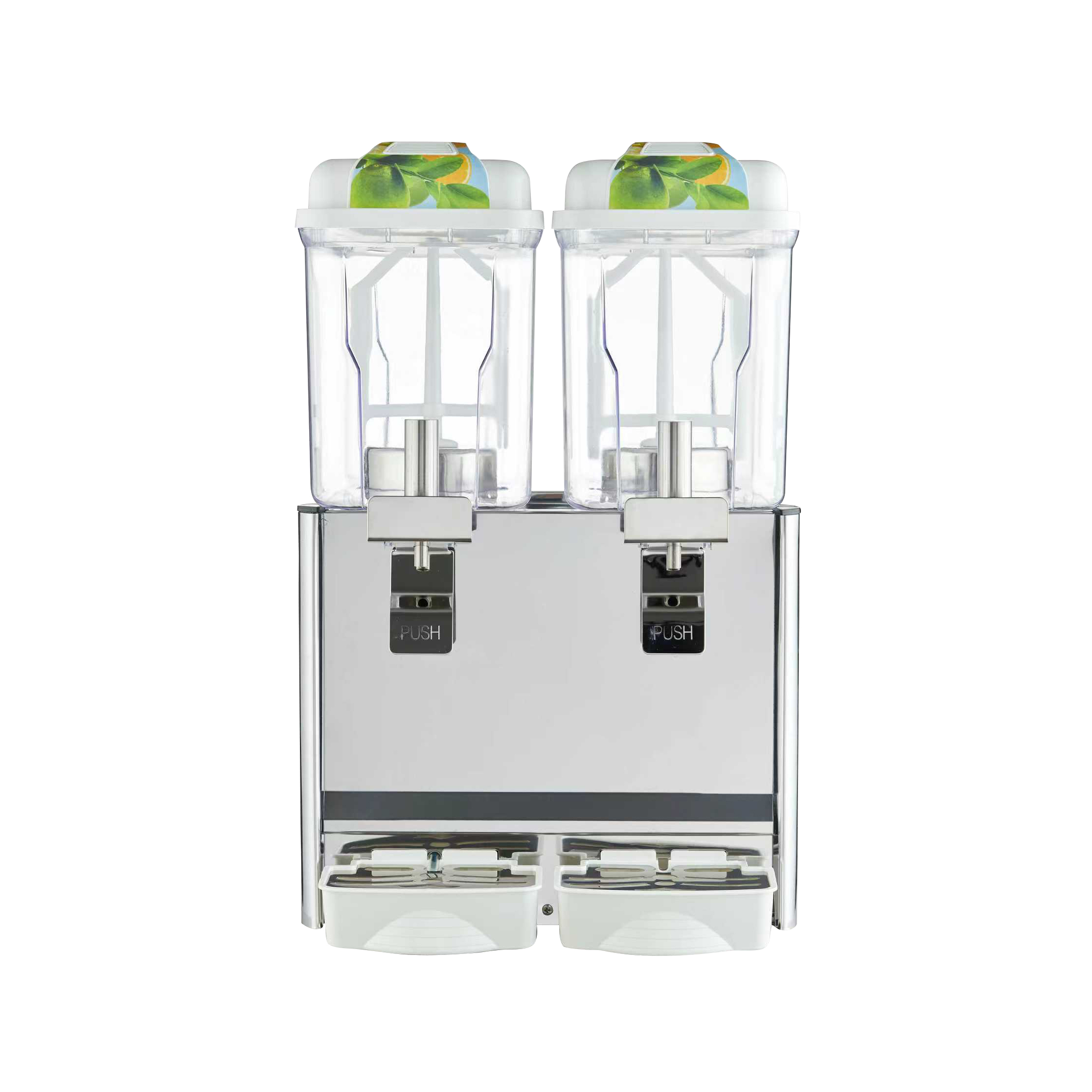
- Agitator or Paddle Systems: These mechanisms gently stir the beverages from the bottom. You must use agitators for any juices containing pulp. They also work perfectly for dairy-based or prone-to-foaming liquids. The gentle rotation prevents heavy separation without creating froth.
- Spray or Fountain Systems: These create an attractive waterfall effect inside the transparent bowl. This visual merchandising drives strong impulse consumption. However, spray pumps clog easily. You should only use them for perfectly clear, non-foaming drinks like apple juice or filtered iced tea.
Finally, evaluate your configuration sizing carefully. Footprint-to-variety ratios dictate your equipment choices. A single-bowl unit fits tight spaces perfectly but limits options. Double and triple-bowl formats offer excellent beverage variety within a surprisingly compact linear footprint. You must measure your available counter space carefully before selecting a high-capacity Juice Dispenser to ensure adequate workflow space.
Core Evaluation Dimensions for High-Volume Environments
High-volume environments expose weak engineering rapidly. You must evaluate potential equipment systematically across several critical performance dimensions. Simple aesthetics will not sustain your operation during a five-hundred-cover breakfast service.
- Cooling Efficiency and Recovery: Buffet ambient temperatures often soar. Surrounding hot food stations generate massive residual heat. Standard initial pull-down speeds matter far less than recovery times. You need high-ambient temperature ratings. Robust compressor sizes handle repeated dispensing and room-temperature refills without losing their chill.
- Material Durability: Flimsy plastics crack quickly under commercial pressure. Acidic beverages like grapefruit juice degrade cheap materials over time. Evaluate the polycarbonate bowl thickness meticulously. Look for heavy-duty stainless steel chassis gauges. High UV resistance prevents clear bowls from yellowing or clouding in sunlit dining rooms.
- Dispensing Valve Engineering: High actuation cycles easily destroy cheap valves. You need specialized pinch-tube or two-piece stainless steel designs. These highly engineered valves remain completely drip-free during extreme dining rushes. They stop floor leaks before they start, preventing serious slip hazards in the dining room.
- Energy Consumption: Multi-machine setups draw massive continuous power. Assess the internal insulation quality. Modern premium units feature smart standby modes. Lower power draw keeps utility bills manageable across large resort or casino venues operating around the clock.
Implementation Realities: Maintenance, Sanitation, and Compliance
Buying the equipment represents only the first operational step. Daily maintenance and cleaning realities truly dictate your long-term service success. Operators frequently underestimate the daily friction associated with beverage stations.
Sanitation standards remain absolutely non-negotiable in food service. Local health codes demand specific, rigorous certifications. You must verify NSF, ETL, or CE markings before finalizing any purchase. These standardized certifications guarantee food-safe materials and hygienic internal valve designs. Health inspectors actively look for these badges during routine facility visits. Missing certifications force immediate equipment removal.
Daily teardown friction causes severe operational headaches. We highly recommend measuring the actual disassembly times of any unit. Staff must break down, deeply clean, and reassemble bowls daily for perishable juices. Complex machines practically invite hygiene shortcuts. Simplified, tool-free engineering ensures your team actually maintains proper sanitation workflows without burning out.
Risk mitigation requires proactive facility planning. Identify common mechanical failure points early. O-rings, dispensing springs, and paddle motors wear out naturally over time. You should standardize your machine parts across multiple venue locations. This standardization simplifies your inventory management dramatically. In-house mechanics fix issues much faster when they know the equipment fleet intimately.
Footprint and ventilation constraints often ruin otherwise great installations. Crowded buffet lineups frequently suffocate heavy-duty compressors. You must ensure adequate rear and side clearance according to manufacturer specifications. Machines need ample room to exhaust hot internal air. Blocked rear vents cause catastrophic compressor failure right in the middle of peak service hours.
Shortlisting Logic: How to Choose Your Cold Drink Machine
Choosing the perfect unit requires a highly systematic, data-driven approach. Follow this specific logic to finalize your purchasing decision effectively.
First, objectively assess your peak Gallons-Per-Hour (GPH). Calculate your absolute busiest 60-minute window of the week. This simple math determines your strict minimum bowl capacity requirements. It also dictates the necessary cooling recovery speed. Do not guess your service volume. Hard data prevents costly under-sizing mistakes.
| Peak Guests Per Hour | Estimated Consumption (10 oz portions) | Recommended Minimum Configuration |
| 100 - 200 Guests | ~15 Gallons / Hour | Double Bowl (3 to 5 Gallons each) |
| 200 - 400 Guests | ~30 Gallons / Hour | Triple Bowl or Multiple Double Units |
| 400+ Guests | 40+ Gallons / Hour | Postmix System or High-Capacity Agitator Bank |
Next, fiercely evaluate the manufacturer's regional service network. Even high-quality commercial machinery occasionally breaks down. Filter out niche brands lacking regional service technicians. You must secure easily accessible OEM replacement parts. Waiting three weeks for an imported replacement valve shuts down your beverage station completely.
Finally, request a comprehensive demonstration and a detailed quote. Compare warranty structures carefully. Compressor warranties often differ significantly from general parts and labor coverage. Ask vendors specifically about bulk pricing models. Multi-unit rollouts usually unlock significant purchasing discounts. Build a strong, ongoing relationship with a specialized beverage equipment dealer.
Conclusion
This pragmatic evaluation framework simplifies your complex purchasing decisions. You must carefully balance visual appeal against the unglamorous realities of daily cleaning routines. Unwavering compressor reliability always trumps flashy exterior design elements in high-traffic buffets.
We strongly recommend prioritizing equipment designed explicitly for true high-volume use. Pick models engineered to reduce daily staff friction. Secure units guaranteeing consistent beverage temperatures under heavy, continuous load. Your guests will notice the refreshing difference immediately.
Take action today to optimize your beverage flow. Connect with a commercial equipment specialist to audit your current buffet setup. Measure your peak volume, evaluate your counter space, and request tailored equipment quotes based on your exact operational metrics.
FAQ
Q: What is the ideal temperature range for a commercial cold drink machine?
A: The ideal temperature range strictly falls between 35°F and 41°F (1.6°C to 5°C). This specific zone represents the ultimate food safety sweet spot. It prevents harmful bacterial growth in perishable juices while ensuring beverages taste crisp and refreshing to your guests.
Q: How often do commercial juice dispensers need to be cleaned?
A: Equipment dispensing perishable dairy or fresh juices requires complete daily teardown and sanitization. Staff must disassemble bowls, valves, and paddles every single night. Conversely, specific enclosed postmix systems handling high-acid syrups may only require lighter daily wipe-downs and less frequent internal deep cleans.
Q: Can I run pulpy orange juice through a spray-style dispenser?
A: No, you should never run pulpy juices through a spray-style dispenser. The internal fountain pumps clog rapidly when exposed to heavy pulp or seeds. This clogging halts beverage circulation and damages the pump motor. Always use agitator or paddle-style models for pulpy liquids.
Q: What is the average lifespan of a high-traffic juice dispenser?
A: A high-quality commercial unit typically lasts between 7 to 10 years in heavy-traffic environments. Achieving this maximum lifespan requires strict adherence to daily cleaning protocols. It also requires prompt replacement of wear-and-tear parts like O-rings, seals, and dispensing springs.


