Upgrading your beverage equipment is never a simple procurement task. It serves as the primary revenue engine for your entire cafe. Choosing poorly inevitably leads to peak-hour bottlenecks. You also face inconsistent drink quality and severe maintenance liabilities.
Consumer preferences are rapidly shifting. Buyers now expect low-acid, highly customized, and iced beverages. Relying entirely on traditional hot extraction limits your profit margins. A manual pouring setup simply cannot keep up. You need a scalable solution designed for high output.
This guide provides a skeptical, data-driven framework. We will help you evaluate commercial beverage setups. You will learn how to match machine capabilities to your specific operational volume. We also cover local power constraints and workflow needs. By the end, you can confidently integrate modern systems to maximize your cafe's efficiency.
Key Takeaways
- Match Output to Peak Demand: Evaluate equipment based on boiler recovery times and dispensing speed, not just maximum daily capacity.
- Cold Beverages Drive Margins: Investing in a dedicated Cold Drink Machine with active recirculation or temperature control is critical to capturing the rapidly growing Gen-Z and millennial market.
- Ancillary Equipment is Non-Negotiable: Budgeting 25% to 40% of your total hardware cost for commercial grinders and reverse osmosis (RO) water filtration is an industry-standard necessity.
- Service Over Specs: A machine’s technical superiority is irrelevant if your local area lacks certified technicians with readily available replacement parts.
The Strategic Shift: Why a Dedicated Cold Beverage System is Now Mandatory
Industry data confirms a massive shift in consumer habits. Younger demographics demand iced, low-acid, and plant-based beverages. The cold brew market alone sees more than 20% annual growth. Cafes ignoring this trend risk losing their most profitable customer base.
Traditional cold brew methods rely on 12-to-24-hour static steeping. This outdated process creates severe capacity limits. It also causes unpredictable stockouts during sudden demand spikes. You cannot scale a business effectively waiting an entire day for extraction.
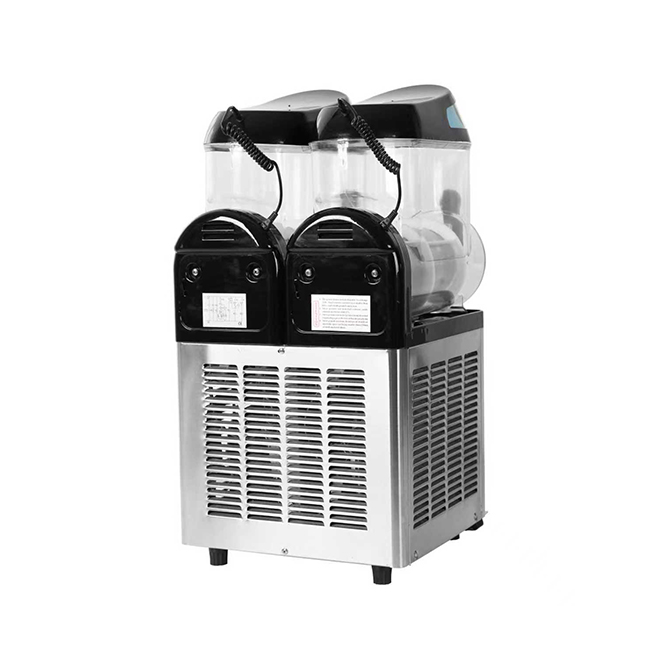
Modern solutions eliminate these bottlenecks. Look for a commercial Cold Drink Machine utilizing active recirculation technology. These systems compress brew times from a full day down to just 45 minutes. They also allow cross-utilization. You can use cold extraction for mocktail bases, cascara, and iced tea infusions. This flexibility dramatically improves your equipment return on investment.
Assessing Your True Volume and Cafe Workflow
You must define success criteria based on your specific venue type. A one-size-fits-all approach guarantees operational failure.
- High-Volume Drive-Thrus & Kiosks: Speed dictates survival. Prioritize push-lever dispensing and high-amperage rapid recovery. Zero-touch automation keeps lines moving smoothly.
- Specialty Sit-Down Cafes: Quality rules here. Focus on multi-boiler systems. They need precise PID temperature controls to accurately extract lighter, high-grade SCA specialty roasts.
- Hotels & Corporate Settings: Consistency and ease matter most. Demand bean-to-cup reliability and idiot-proof touch interfaces. These features significantly reduce training overhead and staff errors.
Stop looking at "cups per day" metrics. This number hides the true stress of your morning rush. You must calculate "cups per hour" during peak times. A machine's recovery time dictates your operational ceiling. Recovery time measures the ability to heat or cool back to optimal serving temperatures following rapid dispensing.
| Venue Type | Peak Metric Focus | Critical Feature |
| Drive-Thru / Kiosk | Speed & Output Volume | High-amperage rapid recovery boilers |
| Specialty Cafe | Extraction Accuracy | Multi-boiler PID temperature controls |
| Corporate / Hotel | Self-Service Consistency | Automated touch interfaces |
Non-Negotiable Technical & Infrastructure Constraints
Never purchase a commercial Drink Machine without first verifying your site's electrical capacity. Manufacturers typically rate machines for 10-amp, 15-amp, or 20-amp circuits. Over-specifying your equipment will force expensive electrical retrofitting. Consult an electrician before finalizing any hardware decisions.
Water logistics also determine your operational flow. Manual fill (pour-over) tanks severely disrupt workflow. They remain viable only for mobile setups or small offices under 25 people. For a commercial cafe, direct-plumbed water lines are mandatory. They must include integrated drainage. This setup eliminates labor waste and prevents disastrous mid-rush shutdowns.
Build quality directly impacts longevity. Plastics easily suffer micro-abrasions and discoloration over time. Food-grade stainless steel is essential for high-frequency touchpoints. It ensures durability while conveying a premium brand aesthetic to your customers.
Best Practices for Infrastructure Checks
- Verify your breaker panel capacity against the machine's peak draw.
- Ensure your plumbing lines include adequate space for inline filtration.
- Inspect internal components for stainless steel over plastic tubing.
Calculating ROI and Hardware Investments
Many cafe owners fall into a common budgeting trap. They spend their entire capital on the main unit. Industry insiders strongly recommend the 30% ancillary rule. You must allocate 25% to 40% of your total budget to flat-burr grinders and multi-stage water filtration. Unfiltered, hard water will scale and destroy an expensive system in mere months.
You also need to project your ongoing consumable waste. Proprietary filters, cleaning tablets, or specialized pods carry high recurring premiums. Always compare these costs against whole bean and loose-leaf bulk pricing. High consumable costs slowly drain your profit margins.
Focus on efficiency as a direct margin booster. Energy-efficient features reduce utility overhead and minimize waste.
Efficiency Feature Comparison Chart | Efficiency Feature | Operational Benefit | Margin Impact |
| Passive Thermal Insulation | Maintains cold temperatures longer | Reduces electricity usage by 15-20% |
| Automated Microfoam Systems | Prevents milk over-pouring and burning | Cuts dairy/plant-milk waste significantly |
| Eco-Mode Boilers | Drops temps during off-peak hours | Lowers baseline utility overhead |
Hygiene Compliance and Smart Fleet Management (IoT)
Cold environments do not kill bacteria. This represents a massive operational blind spot. Improperly cleaned cold beverage systems are high-risk vectors for dangerous pathogens like E. coli. You cannot compromise on sanitation protocols.
Demand machines featuring robust sanitation designs. Look for automated daily flushing protocols. Drip trays must be easily removable and commercial dishwasher safe. Internal pathways require seamless stainless-steel construction. Avoid systems containing blind corners where bacteria can easily pool and multiply.
Digital connectivity transforms fleet management for multi-store operators. Internet of Things (IoT) equipped machines allow management to track consumption metrics remotely. You can monitor active temperatures continuously. More importantly, these systems dispatch predictive maintenance alerts. Catching a failing pump early prevents a catastrophic failure during your busiest weekend rush.
Conclusion
Selecting the ideal beverage equipment requires balancing ambitious output goals against hard physical constraints. Your ultimate decision directly influences line speed, drink quality, and daily profitability.
- Filter by Infrastructure First: Let your existing power and water lines dictate your initial shortlisting logic.
- Prioritize Fast Recovery: Peak hour output matters infinitely more than maximum daily capacity.
- Verify the Service Network: Fast access to emergency repairs and OEM parts holds more value than slightly superior extraction features.
- Audit and Request: Check your current electrical panel limits immediately. Request comprehensive hardware quotes from three distinct regional distributors.
FAQ
Q: What is the difference between a direct-plumbed and manual-fill commercial drink machine?
A: Direct-plumbed machines connect straight to your cafe's municipal water line through a filtration system. They fill and drain automatically, requiring zero staff intervention. Manual-fill machines require baristas to physically pour water into a reservoir. This disrupts workflow and is only suitable for mobile catering or very low-volume setups.
Q: How much should I budget for water filtration alongside my new machine?
A: Water filtration should never be an afterthought. Depending on your local water hardness, expect to spend between $500 and $2,000. You need a commercial-grade Reverse Osmosis (RO) or advanced ion-exchange system. This protects your equipment warranty and ensures absolute flavor clarity in your beverages.
Q: Can a traditional espresso setup efficiently handle the demand for cold beverages?
A: No. Espresso machines can pull hot shots over ice, but they cannot efficiently produce the smooth, low-acid profile of cold brew at scale. High-volume cafes increasingly adopt dedicated cold beverage systems. Recirculation technology meets rising cold demand without over-taxing your hot-bar operations.


